The Great Amnesia — Sacred Science vs. Profane Science
What if the story you've been told about the progress and advancement of science is upside down?
Since school, we've been taught to look at the past with a hint of arrogance. We've learned that ancient sciences like Alchemy and Astrology were merely caricatured shadows of contemporary sciences like Chemistry and modern Astronomy. We also think that our current technology is definitive proof that we are the most intelligent civilization that has ever walked the Earth.
But what if what we call "evolution" was, in fact, a great amnesia?
In the 20th century, the philosopher and mystic René Guénon issued a devastating warning to the West. He argued that modern science has not discovered a new world; it has simply lost the soul of the ancient world. We have exchanged the so-called Sacred Sciences—which sought to understand the profound meaning of existence—for the Profane Sciences, which serve only to manipulate matter.
Today, our exploration will retrieve forgotten maps of the past so that the Sage can help us understand: how did we become a civilization with so much power in our hands, but with so much emptiness in our hearts? And, more importantly, how can we reactivate our gaze to see the invisible again?
A Body Without a Soul
To understand the difference Guénon points out, imagine a human being. They have a physical body, made of muscles and bones, but they also have a soul, a consciousness that gives meaning to their life.
For René Guénon, the Sacred Sciences looked at the universe in this same way. Ancient astronomers, geometers, and alchemists did not ignore the physical world, but saw matter as the "body" of a much greater spiritual reality. The goal of knowledge was not to create industries or accumulate wealth, but to decipher the laws of the Creator and align the human soul with the order of the cosmos. Practical gain was merely a byproduct.
Secular Science, which is our modern science, was born when man decided to cut the thread that connected Earth to Heaven. It banished mystery, discarded the spirit, and isolated only the material body from the universe.
The result? A brilliant science at calculating, measuring, and controlling matter, but completely blind to the meaning of things. We have created disciplines that wonderfully explain how the world works, but are incapable of answering why we are here.
Examples of Degeneration
To prove that modern progress was, in fact, a fall, let's look at four wisdoms of the past that were dehydrated until they became what we have today.
1. From Astrology to Astronomy
Traditional Astrology was never about reading newspaper horoscopes to find out if you'll get a job tomorrow. It was the science of correspondences. The ancients looked to the sky and saw the stars as symbols of superior intellectual and spiritual forces. There was a direct connection between the movement of the macrocosm (the sky) and the microcosm (the human soul).
According to Guénon, when modernity threw away this living connection, what remained was Astronomy: a fantastic science in measuring masses of rock and gas floating in a vacuum, but which transformed the universe into a cold, dead, and purposeless desert.
2. From Alchemy to Chemistry
Popular culture portrays the alchemist as a greedy old man trying to transform lead into physical gold in a dark basement. This is a gross error. The transmutation of metals was, in fact, an external metaphor for the purification of the human soul itself—the so-called "Great Work." The physical laboratory was merely the visual and ritualistic support for an internal transformation.
Modern science took the physical tools of Alchemy, discarded the spiritual process, and generated Chemistry: a purely industrial discipline, focused on creating plastics, fuels, and medicines. Useful for the body, but useless for the spirit.
3. From Sacred Geometry to Profane Geometry
In the Pythagorean schools or the guilds that erected the Gothic cathedrals in Europe, Geometry was God's signature in space. Measuring a shape, drawing a circle, or calculating the golden ratio were acts of meditation. The builders knew that by using certain proportions, they were attuning the human mind to a cosmic harmony.
Today, Geometry has been reduced to abstract equations and utilitarian tools of civil engineering to build gray concrete boxes in large cities. Hard, crude, and soulless buildings for a society that has lost its sense of divine proportion.
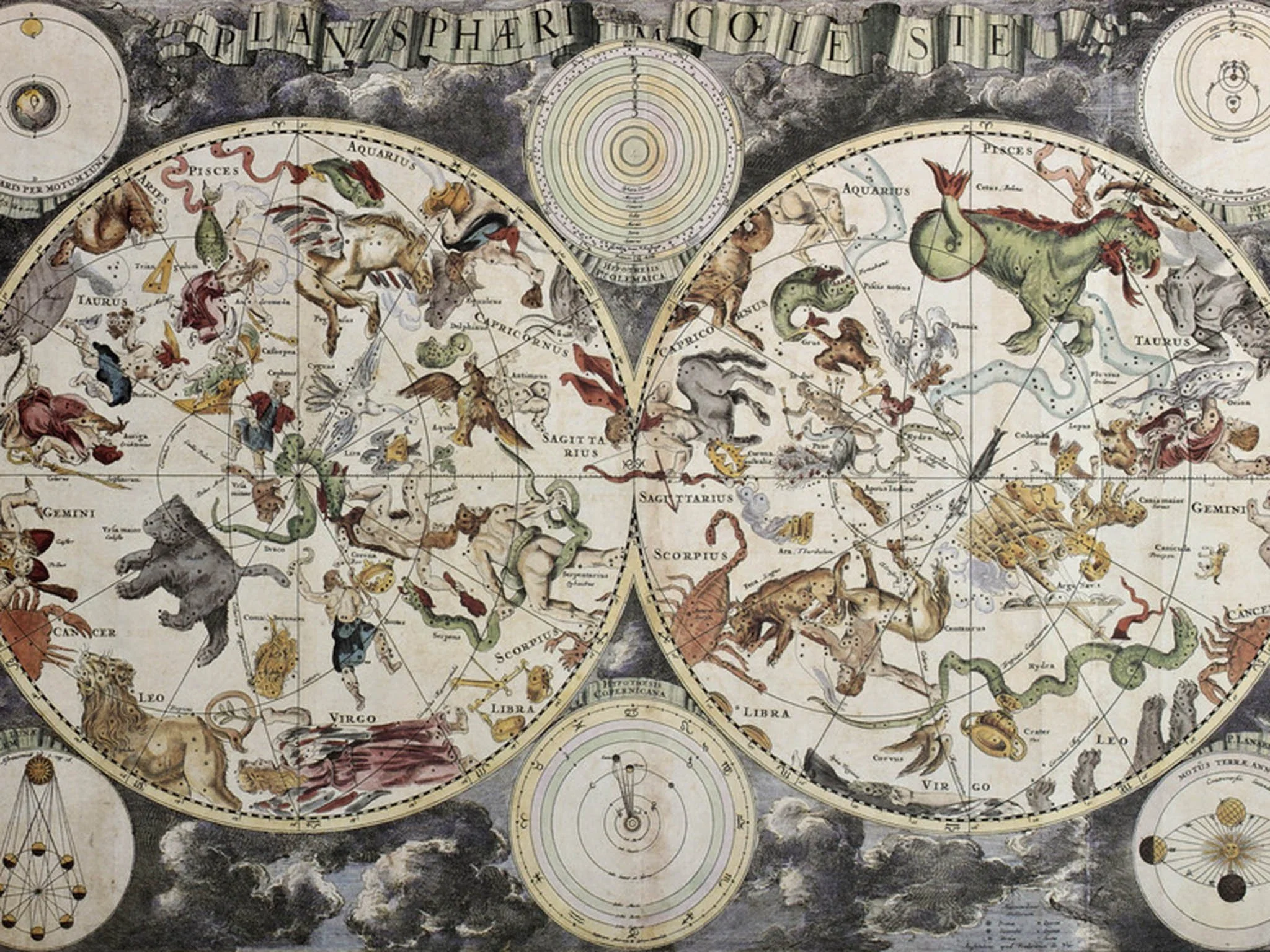
Beyond Astronomy - The science of universal cycles and the myths of Astrology
Do We Live in the Kingdom of Quantity?
When we add up all these losses, we arrive at Guénon's diagnosis of our time: we live in the Kingdom of Quantity.
Our civilization has become a machine obsessed with numbers. We measure everything: the GDP of countries, heartbeats on smartwatches, data in the cloud, the number of followers on social media. If something cannot be quantified, weighed, or transformed into statistics, modern science says it doesn't exist, or that it's merely "subjective."
The problem is that love, purpose, beauty, intuition, and sacredness don't fit into an Excel spreadsheet. And by trying to reduce all of human existence to mathematical data, we generate the greatest existential crisis in history.
We have never had so much technology, so much medicine, and so much access to information. And, at the same time, we have never been a society so anxious, so depressed, and so directionless. This is the price of living on the extreme periphery of reality, focusing only on what is visible and forgetting the axis that sustains everything.
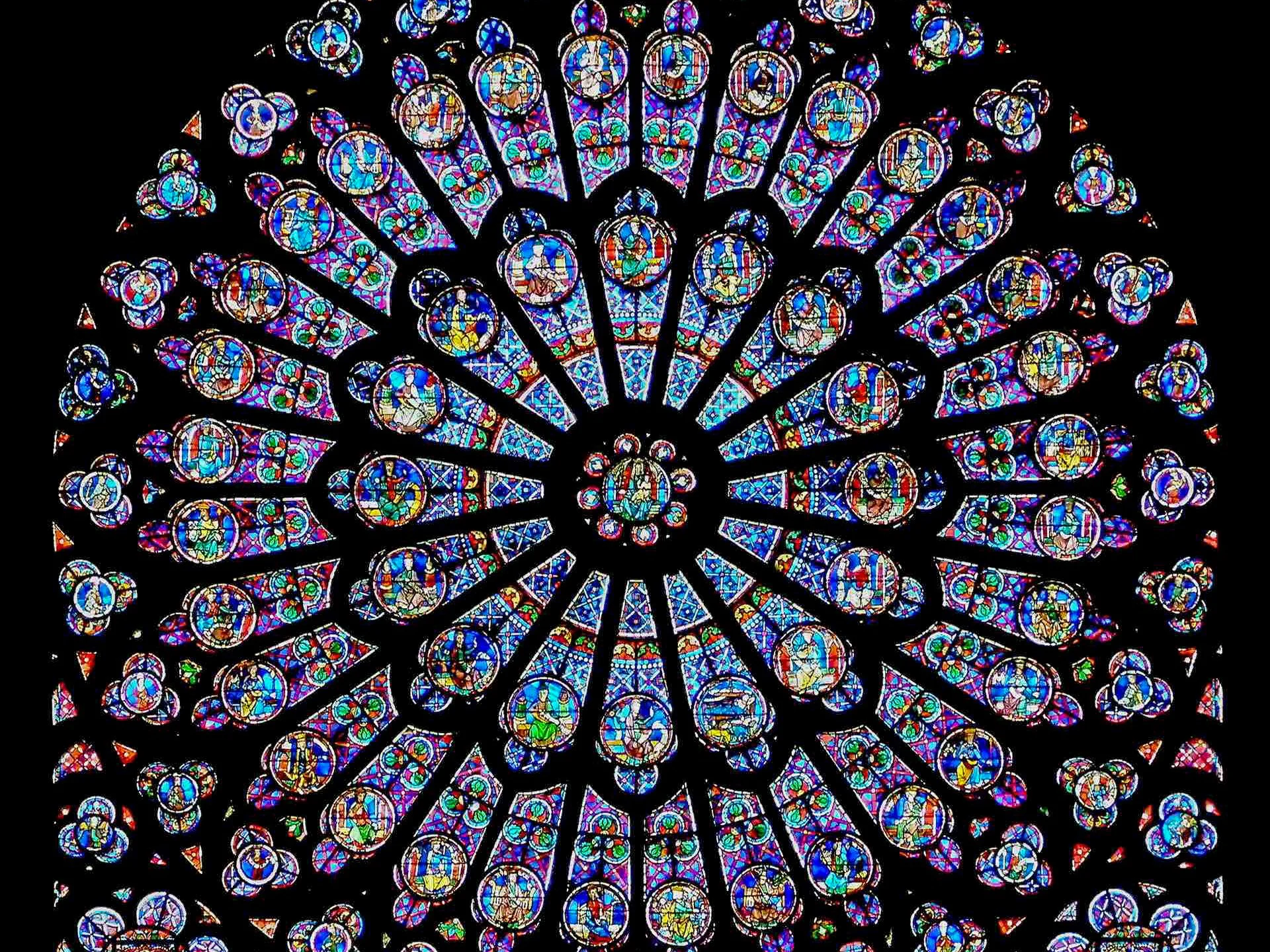
Magnificent stained glass window of Notre Dame Cathedral
How to Access the Source Again?
The question that remains is: if our culture is immersed in this profane and materialistic science, how does the sincere seeker find their way back? How do we access the Sacred Sciences in their original purity?
The answer is not in becoming archaeologists of ancient books. Guénon reminds us of three fundamental steps:
First, ancient works, hermetic manuscripts, and Eastern sacred texts are valuable, but they are the map, not the territory. Reading these books serves to cleanse our minds of modern materialism, helping us to relearn the language of symbols. But if you study an ancient treatise with the same rational and utilitarian mind of today, it will remain useless.
Secondly, the Sacred Sciences depend on the activation of a tool that modernity has tried to atrophy: what the ancients called the Eye of the Heart. This is not about sentimentality, but about Pure Intellect—the human capacity to intuit and grasp the unity behind all things. While modern reason divides reality to analyze it, Intellect unifies.
And the practical way to activate this vision is through silence and contemplation.
In today's world, we are bombarded by noise and information overload all the time. Meditation and stillness serve not only to calm the mind; they serve to empty the cup. It is in silence that the symbol ceases to be an abstract drawing and becomes a living experience. It is when you look at a law of nature, at the geometry of a leaf, or at the movement of life's cycles and suddenly understand the Higher Intelligence that orchestrates everything.
Conclusion
Secular science has given us incredible tools to explore the external world, and there is nothing wrong with using them. The mistake lies in believing that the external world is all that exists.
The transition from secular science to Sacred Science doesn't require you to abandon the laboratory, technology, or your daily life. It only requires you to change the depth of your gaze.
When you choose to silence the noise of the surface and seek truth for its intrinsic value, not for the profit it can yield, you begin the journey back to the center. You cease to be merely a consumer of data and become a true explorer of the invisible.
The modern world may have lost its way, but the truth of the Sacred Sciences remains intact, waiting for those who have eyes to see beyond appearances.
Until the next journey.