René Guénon and the search for the King of the World
Have you ever had the feeling that the world we see, consume, and live in every day is just the surface of a much larger game? That news, politics, and economics are merely pieces moving on a visible chessboard, while the real rules are written behind the scenes, off the map?
At the beginning of the 20th century, a French mathematician and philosopher named René Guénon shocked the intellectual elite of the West. He didn't see the progress of the modern world as a victory, but as an illusion. And at the heart of his most mysterious work, he revealed an idea that seems straight out of a high fantasy novel, but which he defended as the most concrete reality of all: the existence of an inviolable spiritual center, governed by a figure known as the King of the World.
Who is this sovereign? Where is this supreme center that defies history and geography located? And why, ultimately, does understanding this mystery completely change how you see your own journey?
Who was René Guénon?
To understand the mystery, we need to understand the man who pulled the rug out from under modernity. René Guénon was born in France in 1886. He had a brilliant mind for mathematics, but soon realized that modern numbers were too cold to explain the complexity of the human soul.
Guénon looked at the 20th century—with its industries, its wars, and its obsession with material accumulation—and saw no evolution. He saw a profound crisis. For him, the West had forgotten Tradition (with a capital "T"). Not the tradition of family customs, but the One Truth, eternal and universal, that originated all the great religions and philosophies of the past.
Guénon became a mystic, an esotericist, immersing himself in Hinduism, Taoism, and later finding refuge in Sufism, the mystical branch of Islam, moving to Cairo, where he lived almost like a ghost to the West, writing works that seemed to come from another time.
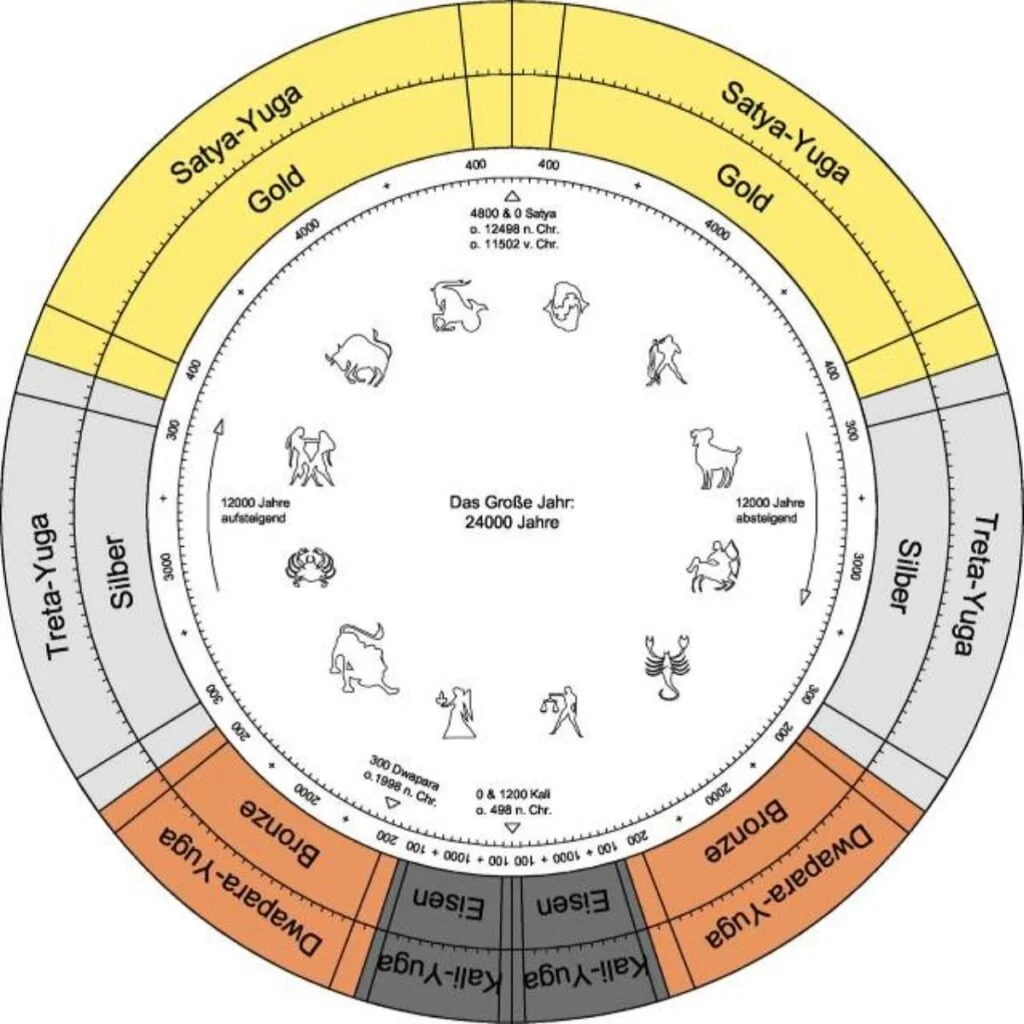
He said that modernity is the apex of Kali Yuga, the dark age of Hindu cosmology, where materialism blinds humanity and spiritual knowledge is forgotten. But Guénon left a clue: even in the midst of darkness, there is a beacon. A center that never goes out.
And it is here that the chessboard gains its most enigmatic character.
The Legend of Agartha and the King of the World
In 1927, Guénon published a short, dense, and overwhelming book called The King of the World. The spark for this book came from accounts that began to leak from the deep East.
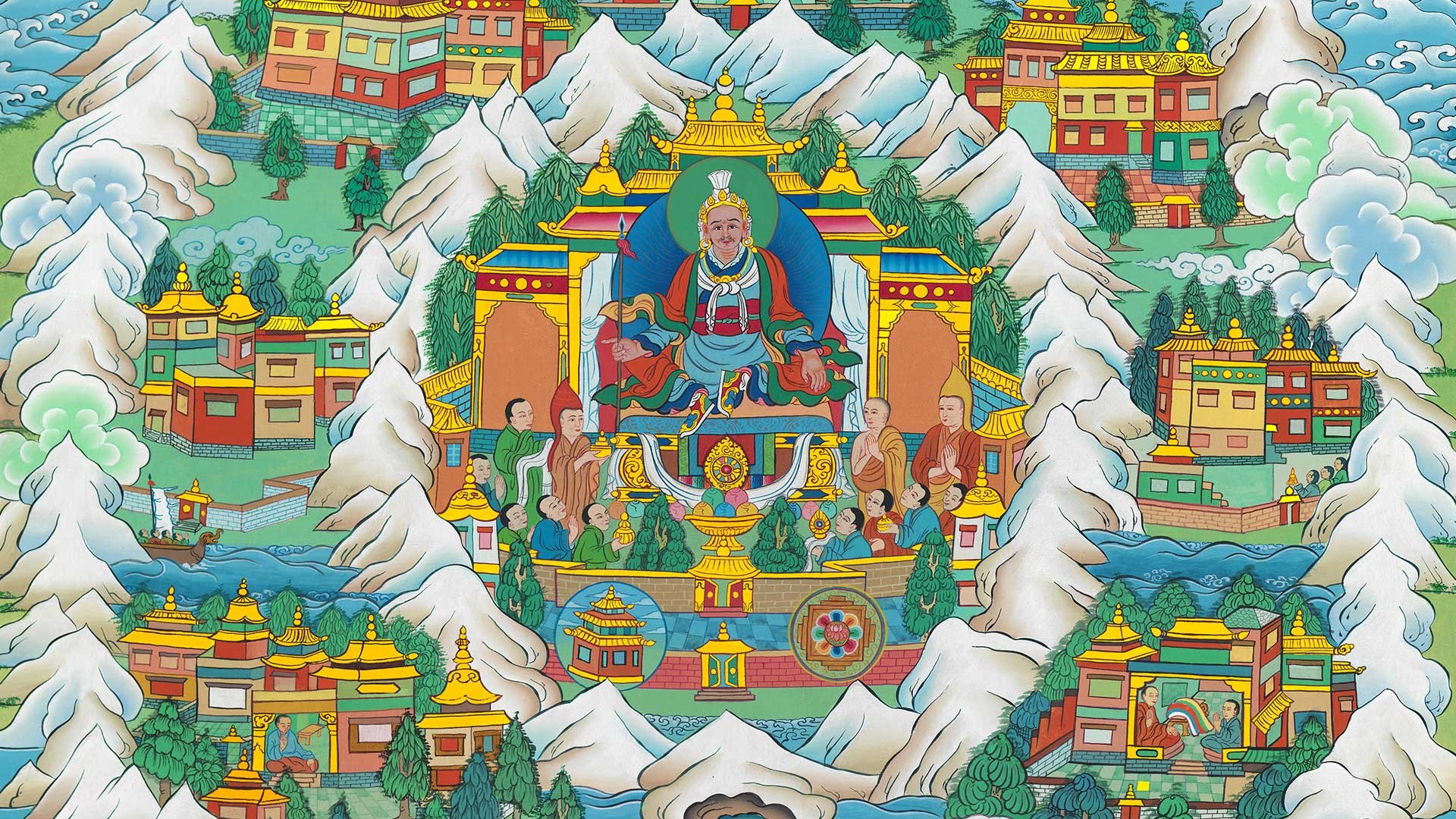
Years earlier, a Polish explorer named Ferdinand Ossendowski traveled through the deserts and mountains of Mongolia and published a memoir called Beast, Men and Gods, which we have already covered in a previous article. In it, Ossendowski claimed that Buddhist lamas secretly spoke of an underground kingdom of continental proportions: Agartha.
According to legend, this realm was not merely physical caves or tunnels, but a sacred dimension where sages and spiritual masters preserved humanity's wisdom far from the destruction of the surface. And on the throne of this realm sat Brahma, the King of the World. A figure who, according to the stories, could read the minds of Earth's rulers and influence humanity's destiny without anyone noticing.
Many intellectuals of the time laughed. They dismissed it as folklore, fantasy, cheap fiction. But René Guénon did the opposite. He didn't pursue folklore; he pursued symbols. Like a detective of invisible realities, Guénon looked at that story and said: "This is not a legend invented yesterday. This is the translation into popular language of a universal metaphysical truth."
Clues on Earth: Mount Kailash and the White Mountain
And what's most fascinating is that the map of this quest leaves us clues carved into the very spine of the Earth. For esoteric traditions, the "White Mountain" mentioned in sacred texts of different religions is not just a metaphor on paper.
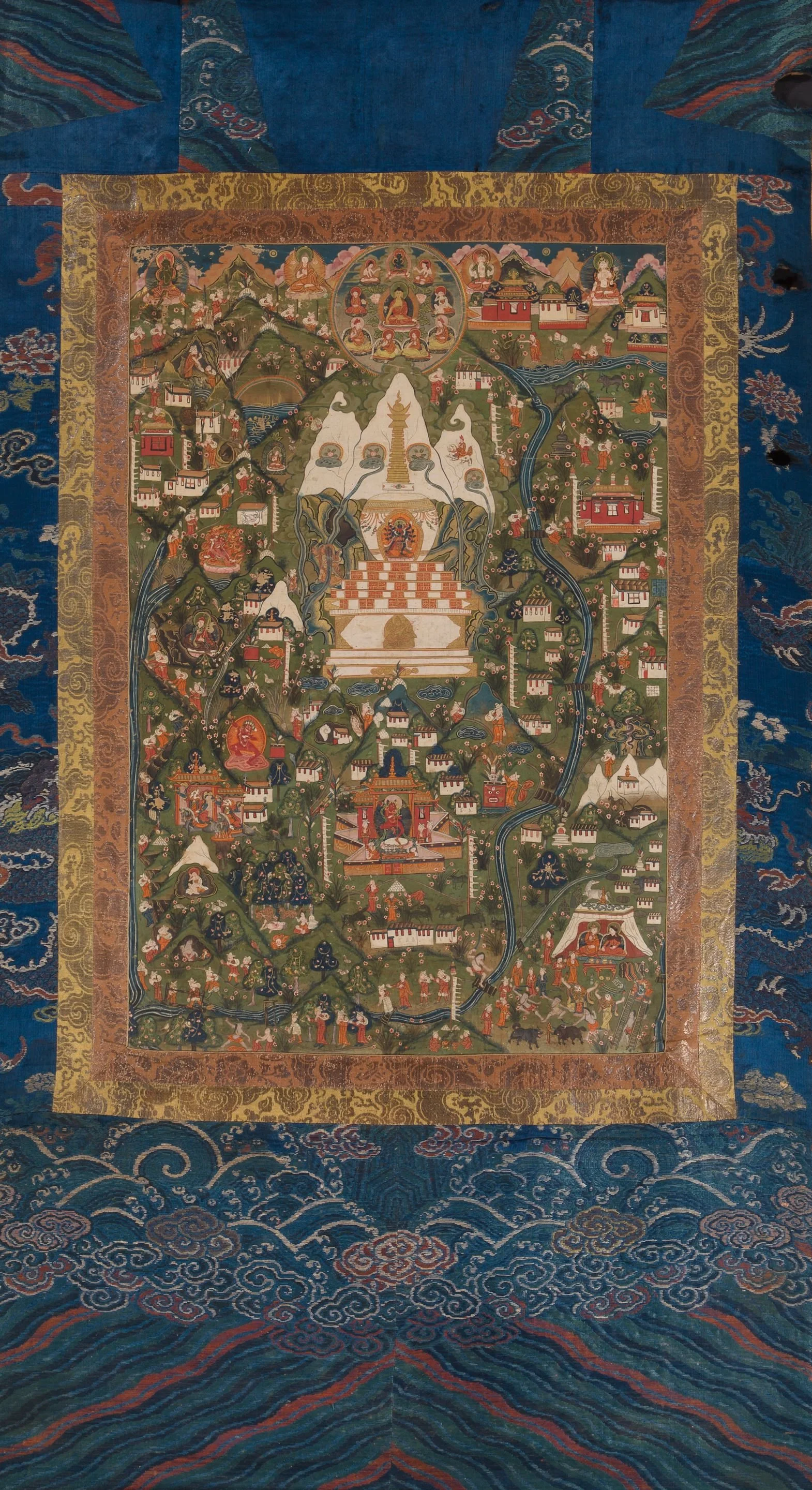
In the heart of Tibet rises Mount Kailash. It doesn't resemble any ordinary mountain; it has the shape of an almost perfect pyramid, and its perpetual snows shine like a beacon against the sky. Ancient Hindu texts refer to it as Sitachala—which literally means "The Pure White Mountain."
For Buddhists, Hindus, Jains, and the ancient Bön religion, Kailash is the geographical and spiritual center of the world, the physical abode of divine forces, and the point of origin of the four major sacred rivers that nourish Asia: the Indus, the Sutlej, the Brahmaputra, and the Karnali.
Kailash functions as the perfect archetype of the World Axis made of stone and ice. It is the physical projection of this sacred center. Note the symbolism: to this day, no one has ever been allowed to climb it. It remains untouched, pointing to the sky, guarding the secret that modern humanity tries so hard to forget.
What is the Real King of the World?
Returning to the King of the World, let's set the stage: For Guénon, this character may not be a man of flesh and blood sitting on a golden throne beneath the earth waiting for archaeologists to find him with pickaxes. That's the trap of literal thinking, the error of the naive explorer.
The "King of the World," in fact, may be a principle. It is the manifestation of the Divine Will that organizes the cosmos. Guénon explains that this term connects directly to the Hindu concept of Manu—the primordial legislator, the being who projects order upon chaos at the beginning of each cycle of humanity.
Think about it: all the great traditions of the Earth have this figure.
In the Old Testament, he appears as Melchizedek, the mysterious "King of Salem" (King of Peace) and "King of Justice," a figure without father, without mother, without genealogy, to whom Abraham himself pays homage.
In Tibetan Buddhism, we have the concept of Shambhala, the city of light that serves as a spiritual refuge for sacred knowledge.
Guénon shows us that the Supreme Center—whether called Agartha, Shambhala, or Salem—represents the place where Earth connects with Heaven. It is the Axis of the World (Axis Mundi). The fixed point around which the entire wheel of history revolves.
While surface empires are born, shine, and crumble, the Center remains intact. It is the heart of the game. And the one who governs this heart is the supreme spiritual intelligence of the Earth.
The Infinite Game of History
And here the board expands in a fascinating way. If this spiritual center exists, how does it interact with our reality?
Guénon explains that human history goes through cycles of concealment. In the beginning of time—what the Greeks called the Golden Age—the Supreme Center was visible, open. Humanity lived in direct harmony with spiritual truth. There was no need for temples, dogmas, or secrets.
But as time progresses and humanity moves away from the source—falling into the Silver Age, the Bronze Age, and finally, our Iron Age—this Center needs to protect itself. It becomes inaccessible. Knowledge becomes "esoteric" (internal, hidden). Agartha "descends" underground.
But pay attention: the "underground" here is a symbol for the unconscious, for the invisible. The Center continues to issue its directives, but now indirectly, through emissaries, initiatory lineages, flashes of wisdom that inspire the great leaps of human consciousness throughout the centuries.
The kings, generals, and presidents of our history think they are in control of the game. They move armies, sign treaties, and change borders. But on Guénon's infinite chessboard, they are merely pawns reacting to the invisible currents emanating from the Center. True power makes no noise; He doesn't need publicity. He simply is.
The Illusion of Modernity
Why did this message from Guénon cause so much discomfort and continue to do so today?
Because our modern society is obsessed with movement, with novelty, with speed. We have been taught to believe that the new is always better than the old, that technology will solve all our existential crises, and that the pinnacle of success is accumulating data, possessions, and titles.
Guénon gives us a shock of reality. He says that when a civilization cuts its roots with the Center, with the sacred, it becomes an empty shell. It begins to spin faster and faster, but without a central axis, until centrifugal force shatters it. This is what he calls The Reign of Quantity.
When we look at the world today—the collective anxiety, the loss of purpose, the feeling that we are running without getting anywhere—we are seeing the result of living on the extreme periphery of the wheel, as far away as possible from the fixed axis. We have forgotten the King of the World. We have forgotten that there is an inner order, an intelligence that governs our own lives if we know how to silence the noise on the surface.
Conclusion
Every journey of exploration leads us outward, ultimately making us look inward.
The search for Agartha, for the King of the World, and for the truths of René Guénon is not a geographical treasure hunt. You won't find the Supreme Center by buying a plane ticket to Tibet or digging caves in Mongolia.
The Supreme Center is, above all, a state of being.
In the Infinite Game of life, you can choose to continue playing on the periphery of the wheel, being pushed from side to side by the crises of the day, by cell phone notifications, and by the illusions of the material world. Or you can choose to take the path back. The middle path. The path towards the axis.
Finding your own inner "King of the World" means discovering that part of you that is unshakable. That deep, peaceful, and wise consciousness that doesn't change, no matter how big the storm raging outside.
Guénon reminded us that the modern world may have lost the map, but sacred territory remains exactly where it always was. Intact. Waiting for explorers who have the courage to seek the truth beyond appearances.
The board is set. The pieces are moving. But now, you know where to look.
Until the next journey.