Are We Living the End of the West? (by Oswald Spengler)
Look around you. Not to the screens, but to what they are trying to hide from us.
Have you ever had the subtle but persistent feeling that we are living in the “end of a party” of a great civilization? That realization that our culture is no longer creating anything genuinely new, just recycling the past, hypertrophying the technique and accelerating the pace so that we do not realize the void?
What geopolitics today calls the "multipolar crisis," economics calls "stagnation" and psychology calls "an anxiety epidemic," a German philosopher, just over a century ago, called by another name: Decadency.
In 1918, while Europe still cleaned the blood from the trenches of World War I, Oswald Spengler published a book that shocked the world: The Decadence of the West (Der Untergang des Abendlandes). He didn't try to predict the future by looking at a crystal ball; he looked at history as a biologist looks into a forest.
But the question I want to investigate with you today is this: Was Spengler's diagnosis right? Do we enter our terminal phase?
The Anatomy of Civilizations
To understand Spengler, we need to shatter the way we were taught history in school. Forget that straight, progressive line: "Antiquity, Middle Ages, Modern Age, Contemporary Age," as if humanity were walking step-by-step toward a perfect utopia.
Spengler argued that this is an arrogant illusion. For him, history is not a line. It is a living organism.
"Civilizations are living beings. They are born, they grow, they mature, they age, and, inevitably, they die."
He identified around eight great cultures throughout history—such as the Egyptian, the Apollonian (Greco-Roman), the Magian (early Arab-Christian), and ours, which he calls the Faustian (the modern West).
Each of these cultures has a soul, a youth filled with mysticism, a maturity of great artistic creations, and, finally, old age. And here lies the core of Spenglerian thought, the distinction that changes everything: the difference between Culture (Kultur) and Civilization (Zivilisation).
Culture is the living, creative, spiritual phase. It is when a society is connected to the sacred, creating new forms of art, architecture, and philosophy. It is the springtime and summer of a people.
Civilization is the final stage. It is autumn and winter. It is when the soul of that people dries up, artistic creativity dies, and all that remains is pure intellect, technique, bureaucracy, the gigantism of megacities, and the pursuit of money.
When a Culture transforms into a Civilization, it stops growing from within and begins to expand only from the outside. It becomes a rigid shell. And according to Spengler, the West entered its "Civilization" phase around the 19th century. Today, we are living in its deep winter.
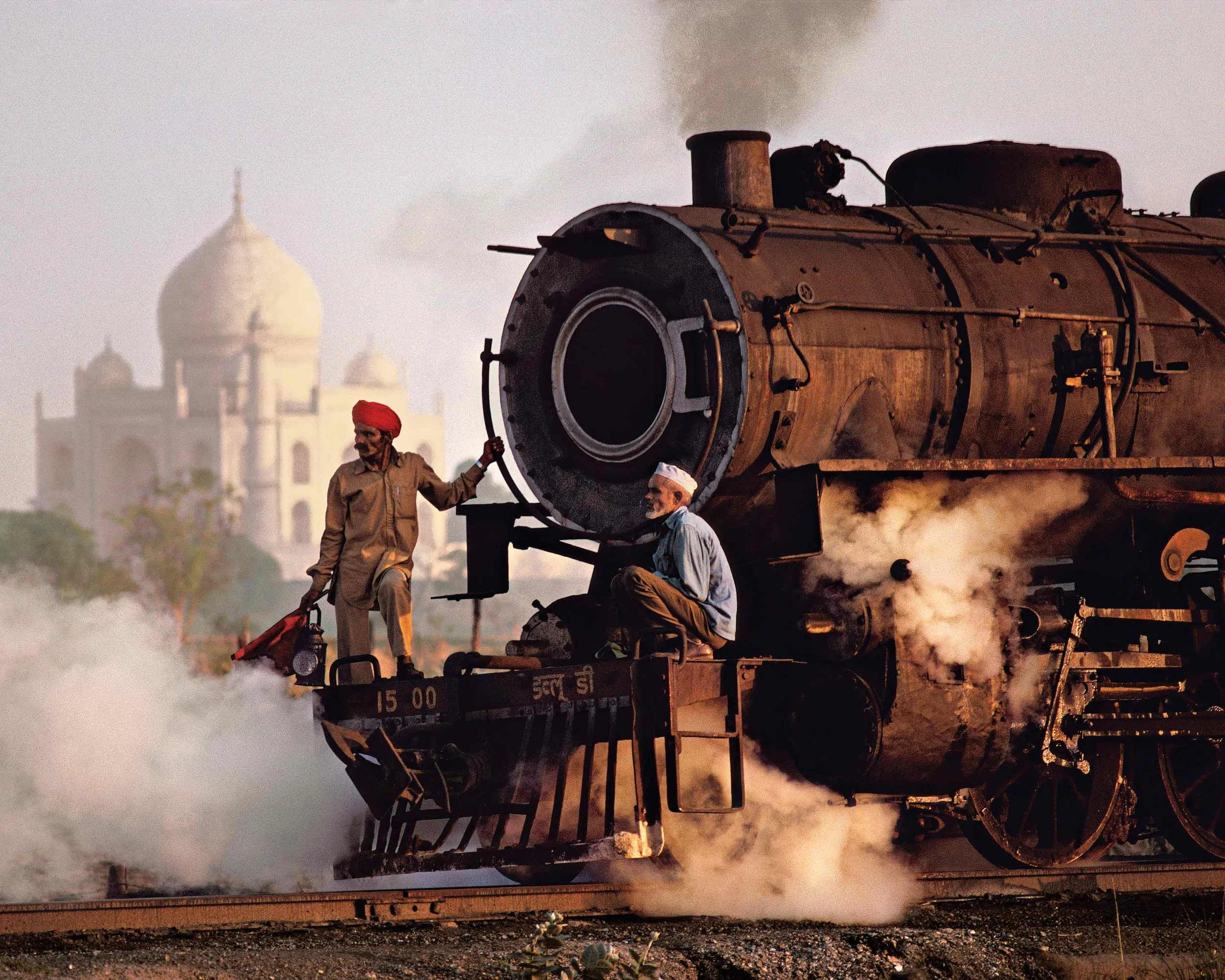
Foto Steve McCurry
Connecting the Dots with the 21st Century
If Spengler were alive today, browsing TikTok, looking at Wall Street charts, or analyzing global tensions and the dynamics of the BRICS nations, he wouldn't be surprised. He would simply say: "I told you so."
Let’s cross his diagnosis with our current decadence in three brutal points:
1. The Empire of Technique and Artistic Emptiness
In the Culture phase, Western man (the Faustian man, who seeks to master the infinite) expressed his soul in the music of Bach, the architecture of Gothic cathedrals, and the paintings of Rembrandt. There was a quest for the transcendent. Today, what is our art? We live in the era of the remake, of nostalgia, of the algorithm replicating formulas that have already worked. Technique has replaced inspiration. We have artificial intelligences generating flawless images in seconds, but where is the soul? We have movie blockbusters costing hundreds of millions of dollars that are empty of meaning. Our era belongs to engineering, not creation.
2. Megalopolitanism and the "Caesar"
Spengler predicted the rise of the Megapolis—monstrous cities that suck the vital energy out of the countryside. In these cities, man becomes an isolated atom in the crowd, a rootless being guided by money and manipulated public opinion. He predicted that, at the end of civilization, democracy would become a farce controlled by financial power, which would eventually pave the way for Caesarism: the return of highly centralized leaders, figures of raw power who rule above dying institutions because the masses tire of bureaucratic chaos. Look at global polarization today and tell me if that doesn't resonate.
3. Money Against Blood
In the final phase, money becomes the measure of all things. Traditional values, family bonds, connections to the land—everything is dissolved into the global market. But Spengler points out that this dominance of money does not last forever. In the end, the sheer biological strength of younger peoples or the internal collapse of the structure causes "blood" (the elemental forces of life, survival, and tradition) to retake control, destroying the financial house of cards.
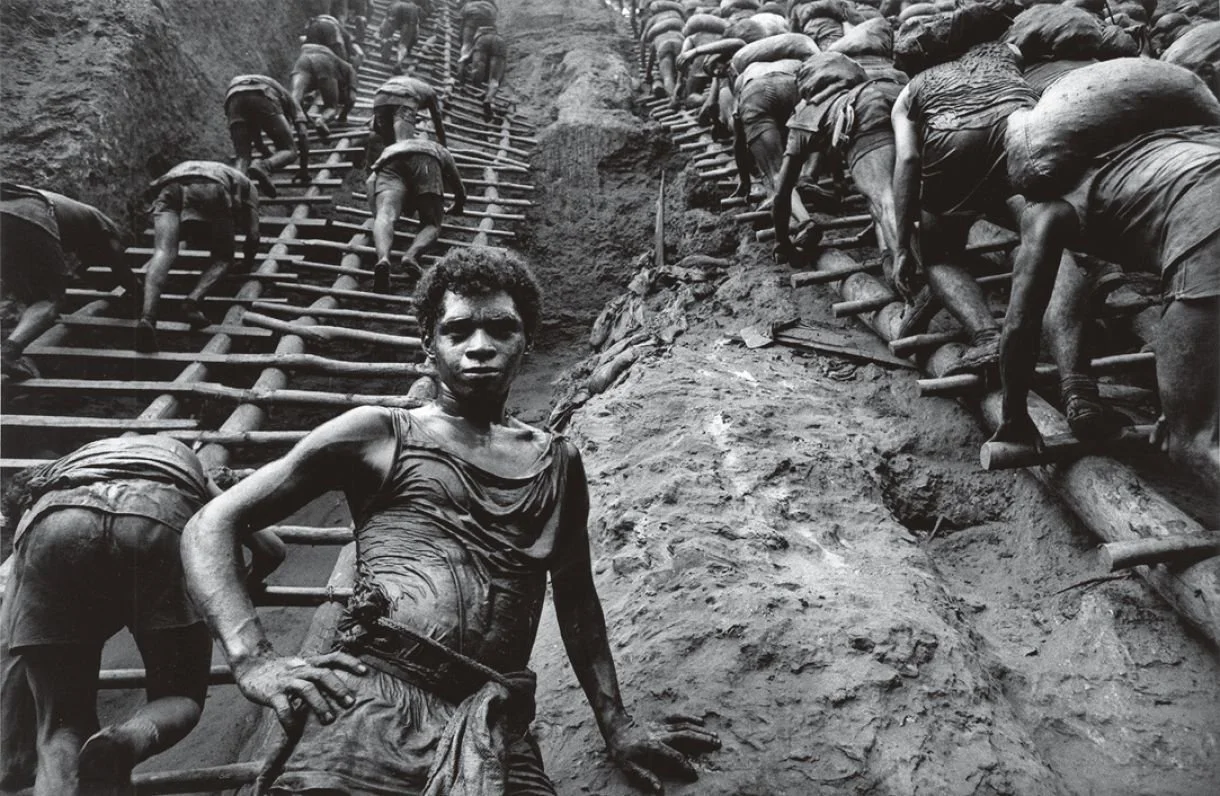
Garimpo em Serra Pelada, Foto Sebastião Salgado/Divulgação
Faustian Man and His Destiny
But why does our decline feel so... technological and tragic at the same time?
Because the soul of the West is Faustian—inspired by the myth of Faust, who sells his soul to the devil in exchange for infinite knowledge and mastery over nature. Western man accepts no limits. He wants to colonize space, conquer biology, digitalize consciousness, and control the climate.
Yet, this very same force that generated modern science is the force that exhausts us. We have stretched the rope to its absolute limit. Our current decadence is not a lack of resources or technology; it is a crisis of meaning. We have all the tools in the world, but we forgot where we were walking.
Spengler uses an eerie and beautiful metaphor for the end of our era. He speaks of the Roman soldier whose bones were found in Pompeii. He didn't die running, trying to save himself from the eruption of Vesuvius. He died at his post because no one had relieved him of his duty.
For Spengler, destiny is written. We cannot choose the season of the year in which we are born. If we are born in the winter of civilization, there is no use pretending it is spring. Our duty is to face this winter with the dignity of that Roman soldier.
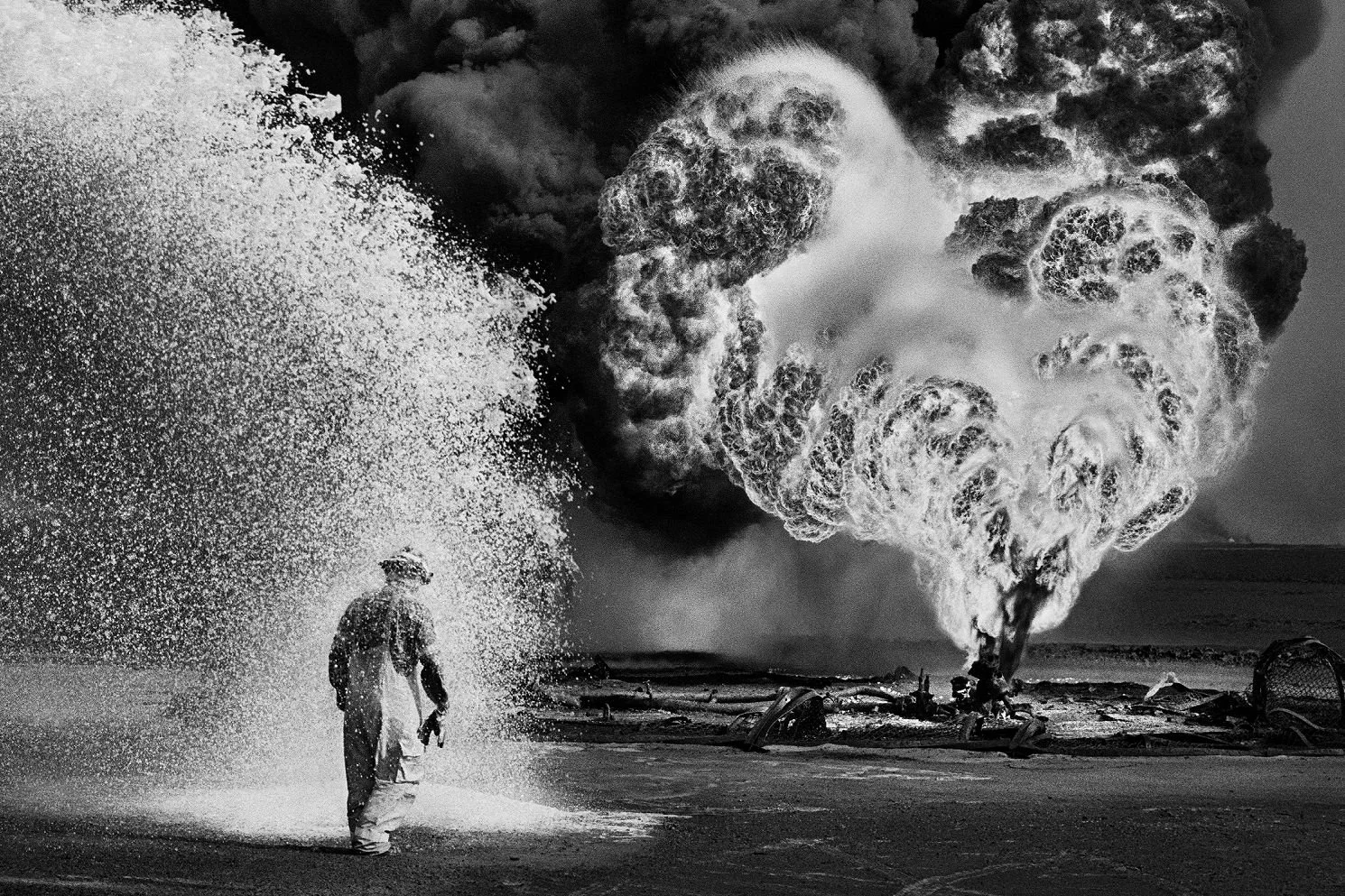
Campos de Petróleo em Chamas, Guerra do Kuwait - Foto Sebastião Salgado/Divulgação
What is Left for Us?
Watching the world panorama today can generate a paralyzing nihilism. It’s easy to look at the news, the geopolitical crises, the cultural decline, and simply give up, burying our heads in cheap entertainment.
But the lesson I take from Spengler is not one of despair. It is one of clarity.
When you understand that certain things are collapsing not because of politician A or B, or a wrong choice made yesterday, but because the great tectonic plates of history are moving... you stop wasting energy on superficial outrage.
If the macro-structure is in its winter phase, our mission becomes micro. To preserve what is alive. To cultivate depth where the world chose haste. To seek real beauty where the market delivers the generic. To build spaces of truth, connection, and knowledge that can weather the storm.
Civilizations die, but life always continues. Winter is long, but it is exactly when the soil prepares for what will be born next.
The question I leave for you to think about in the comments today is: knowing that we cannot change the macro-destiny of our era, where will you set your post to stand firm?
Until the next exploration. The truth is out there.